Canude Camping
[contains nude image]Canoe camping combines the cargo carrying advantages of boat camping with the peace, quiet, and physical exercise aspects of backpacking.
Canuding along a quiet stream you can see and hear things motorboats would scare away. You are also able to go places other boats can't, like shallow and/or narrow streams, mud flats, etc.
Because of the lightweight typical of a canoe, you can pull it out of the water entirely if you want to "hide" your campsite, or just keep the boat secure from drifting loose.
Sometimes there is an advantage to hiding your campsite from passing boats. I have noticed a strange phenomenon when I am camping by the water. Many boaters tend to land right next to folks who have already set up camp rather than spreading out over the available areas. (Who ARE these nuts?) Anyway, if you can conceal your presence, they may be less likely to intrude.
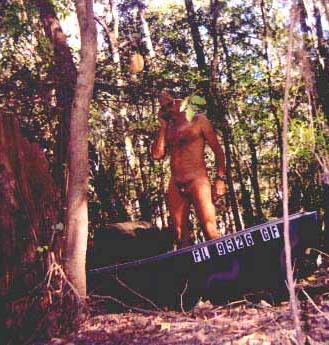
Checking in with the office.
If you do leave your canoe out by the water, place one of your "Nudist Area" or similar signs right at the canoe. Then if someone lands there, they will be forewarned. If they set up their camp next to you, try not to be rude or distant with them. If they knowingly set up next to a nudist campsite, they may be interested enough to "check it out", or even try it out. Being friendly with them may result in making new "converts".
Everyone has heard stories about canoes tipping over and everything getting soaked. This may be due to the fact that most people (I'd guess 80 - 90 %) simply don't know the first thing about canoeing. This includes many who have canoed for years without major mishap. Practicing your mistakes does not make you an expert canoeist - it just means you've been lucky so far. There is a tendency to think "how hard can it be - you paddle and you go". Proper canoeing requires modest training, and a lot of applied common sense.
This web page is not intended to be a basic course on canoeing. Many books have been written on that, and I recommend you get one. Click here to see some suggested books.
Some of the really barest essentials of canoe control include:
1 NEVER, NEVER, NEVER paddle on the same side of a canoe when with another person. It is the single biggest cause of canoe upsets. It's also not as efficient as coordinated strokes on opposite sides of the canoe, and it marks you as a greenhorn. (If you need more "turning power" one person can backpaddle on his/her side while the other paddles forward on the opposite. This allows the canoe to pivot rather than making a wide turn.)
2 The person in the back steers. The rear seat has much more leverage than the front. It is amazing how heatedly the best of friends can manage to argue about who is supposed to do what. Just let the laws of physics settle it: the back person steers, and the front person supplies power and if told to backpaddle to help steer, does so. Out of courtesy and practicality, the person in front should act as a lookout and tell the back person to veer left or right to avoid obstacles. The steersman can also apply power strokes, but must compensate, since he will tend to overpower the front man and start turning the canoe. This can most easily be done by turning the paddle into a "rudder" at the end of each stroke.
3 When switching sides, out of courtesy say something before you switch so the other person is prepared and can switch at the same time.
If you are unsure of what any of the above means, do yourself a favor and get one of the beginner canoeing books.
The Paddling Bares have a good naturist canoing page. Click here to go there.

